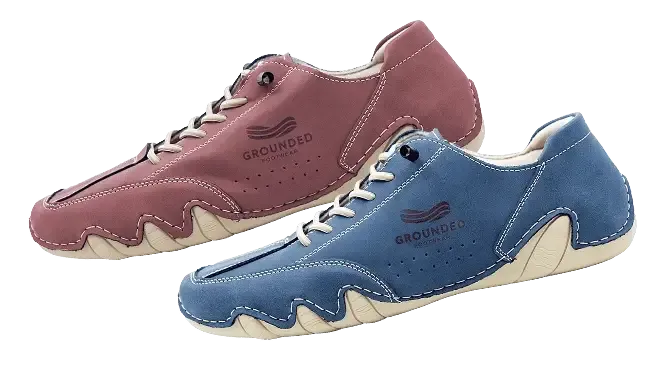
You’ve probably seen grounding shoes pop up on wellness blogs and social media. Some people swear they eliminated their chronic foot pain. Others claim better sleep, less inflammation, and more energy — just from changing their footwear.
But do grounding shoes actually work, or is this another wellness fad dressed up in scientific-sounding language?
In this article, we break down what grounding shoes really are, what peer-reviewed research says about earthing, the specific benefits that hold up to scrutiny, and which shoes are actually worth buying in 2026.
What Are Grounding Shoes?
Grounding shoes — also called earthing shoes — are footwear designed to allow a direct conductive connection between your body and the earth’s surface. Unlike conventional shoes with rubber or synthetic soles that act as insulators, grounding shoes use conductive materials (typically carbon plugs, copper inserts, or leather soles) that allow electrons from the ground to transfer into your body when you walk on natural surfaces like grass, soil, or sand.
The premise sounds unusual at first. But it’s based on a straightforward electrical principle: the earth carries a mild negative charge, and direct skin contact with the ground allows your body to absorb free electrons — which may act as antioxidants at the cellular level.
Grounding vs. Earthing — What’s the Difference?
The terms are often used interchangeably, and for good reason: they describe the same thing. Earthing is the older, more clinical term used in the research literature. Grounding is the popular term that’s become standard in the footwear and wellness space.
Both refer to the practice of maintaining direct physical contact with the earth’s surface — whether barefoot on grass, through a grounding mat indoors, or via conductive-soled shoes on natural ground.
How Grounding Shoes Work
A standard rubber-soled shoe creates a complete barrier between your skin and the ground. No electrons get through. Grounding shoes solve this by embedding a conductive pathway — usually a small carbon or copper plug — that runs from the insole through the outsole to the ground-contact surface.
When you walk on a conductive surface (natural earth, grass, sand, unsealed concrete), electrons can flow from the ground, through the conductive plug, into the insole, and into your foot. The effect is the same as walking barefoot — but with the protection, support, and comfort of a proper shoe.
What Does Research Say About Grounding?
Grounding is one of the more studied wellness interventions of the past two decades, with a meaningful body of peer-reviewed research — much of it published in journals like PubMed, PMC, and Journal of Inflammation Research.
Here’s what the evidence actually shows:
Inflammation and immune response. A 2015 systematic review published in PMC (Earthing: Health Implications of Reconnecting the Human Body to the Earth’s Surface Electrons) synthesized findings across multiple controlled studies and found that grounding produced measurable reductions in inflammatory markers and changes in immune cell activity. The proposed mechanism — free electron uptake neutralizing reactive oxygen species — is consistent with established antioxidant chemistry.
Sleep and cortisol. A randomized double-blind pilot study published in The Journal of Alternative and Complementary Medicine found that grounded subjects showed normalization of cortisol rhythms and reported significant improvements in sleep quality, pain levels, and stress compared to the sham-grounded control group.
Blood viscosity and circulation. A 2013 study published in the Journal of Alternative and Complementary Medicine found that grounding significantly reduced blood viscosity — a key risk factor for cardiovascular disease — in a double-blind crossover design. Participants showed meaningful changes in red blood cell zeta potential after as little as two hours of grounding.
The bottom line on the science: Grounding is not without controversy, and larger clinical trials are still needed. But the existing evidence is not trivial — and it’s more substantive than most people assume going in.
The Benefits People Report From Grounding Shoes
Based on both the research literature and the consistent reports from long-term users, the most credible benefits of regular grounding footwear use include:
- Reduced foot and joint pain — particularly in people with plantar fasciitis, heel spurs, and general arch pain, where the combination of grounding and a wide toe box allows natural foot mechanics to work
- Less inflammation — many users with chronic pain conditions report noticeable reductions in swelling and soreness, consistent with the anti-inflammatory mechanism proposed in the research
- Better sleep quality — likely linked to cortisol normalization; users who wear grounding shoes through the day and then ground before bed report this most consistently
- Improved energy and reduced fatigue — reported especially by people who spend significant time on their feet; possibly related to improved circulation and reduced oxidative stress
- Fewer leg cramps and muscle tension — reported more anecdotally, but consistent enough to be worth noting
- General sense of calm and stress reduction — the cortisol data supports this; grounding appears to influence the autonomic nervous system toward a parasympathetic (rest-and-recover) state
It’s worth being realistic: grounding shoes are not a medical treatment and results vary. But the overlap between what users report and what the research supports is meaningful — more so than for many popular wellness products.
Who Are Grounding Shoes Best For?
Grounding shoes aren’t for everyone, but they make particular sense for specific groups:
People with plantar fasciitis or heel pain. The best grounding shoes combine their conductive soles with wide toe boxes and zero-drop construction — which addresses the structural causes of plantar fasciitis alongside any grounding benefit. Many users find relief they never got from orthotics or conventional footwear.
People with wide feet or bunions. Most grounding shoes are built on a foot-shaped last, which means the toe box matches the natural width of your foot rather than tapering artificially. This alone — independent of any grounding benefit — significantly reduces pressure on the forefoot.
People who stand or walk all day. Nurses, retail workers, teachers, and tradespeople who spend 8+ hours on their feet report meaningful benefits from the natural gait mechanics that zero-drop, wide toe box footwear encourages.
Earthing enthusiasts who want protection. If you already practice barefoot grounding outdoors, grounding shoes let you extend that practice to more environments without the obvious limitations of going fully barefoot.
People exploring natural approaches to chronic inflammation. If you’re dealing with systemic inflammation, joint pain, or fatigue and you’ve already addressed diet and sleep, grounding footwear is a low-risk, low-cost addition worth experimenting with.
What to Look for in a Grounding Shoe
Not all grounding shoes are created equal. Here’s what actually matters when evaluating a pair:
1. Genuine conductive pathway. The most important factor. The shoe needs a verified conductive plug or material running from the insole contact point through to the outsole exterior. Some brands are vague about this — look for specific mention of carbon or copper conductive inserts, not just “natural materials.”
2. Wide toe box. A toe box that matches natural foot width allows your toes to splay on landing, which improves balance, reduces forefoot pressure, and supports the plantar fascia. If the toe box is narrow, the shoe fails as a barefoot shoe regardless of its grounding properties.
3. Zero drop or minimal heel elevation. A flat heel-to-toe profile keeps your weight distributed naturally and encourages the midfoot strike pattern that reduces impact stress. High-heeled grounding shoes undermine the biomechanical benefit.
4. Flexible sole. Your foot needs to bend and respond to the ground. A stiff sole disconnects you from natural feedback and reduces the proprioceptive benefit of minimal footwear.
5. Appropriate sole thickness for your lifestyle. Thinner soles maximize ground feel and conductivity. Thicker conductive soles offer more protection for urban environments. Neither is universally better — it depends on where and how you wear them.
→ Want a shortcut? We’ve reviewed the best grounding shoes available right now, including our top picks for plantar fasciitis, wide feet, and all-day wear. See our full grounding shoes guide here.
The Best Grounding Shoes in 2026
After reviewing the current market, three products stand out for combining genuine conductive construction with the biomechanical features that make grounding footwear actually worth wearing.
1. Evolve Barefoot Grounding Shoes — Best Overall
The Evolve is the most complete grounding shoe on the market for most people. It pairs a verified conductive carbon plug sole with a generously wide toe box, zero-drop profile, and a flexible outsole that allows full foot movement. Available in multiple widths. Works well for both casual wear and light outdoor use.
Best for: All-day wear, plantar fasciitis, wide feet, first-time grounding shoe users.
2. Non-Slip Barefoot Grounding Shoes — Best for Active Use
Built for people who need grip and durability alongside grounding benefits. The outsole pattern provides solid traction on uneven terrain while maintaining the conductive pathway. Slightly more structured than the Evolve, which makes it better for longer walks and outdoor surfaces.
Best for: Walking, hiking, standing jobs, nurses and healthcare workers.
3. Grounding Winter Boots — Best for Cold Weather
The only grounding option that doesn’t sacrifice warmth. Insulated construction with a conductive sole maintains the earthing pathway even in winter conditions. Waterproof exterior. Zero-drop last.
Best for: Cold climates, outdoor workers, anyone who doesn’t want to pause their grounding practice in winter.
→ See current pricing, detailed specs, and where to buy all three: View our full grounding shoes comparison.
Grounding Shoes vs. Regular Barefoot Shoes
This is a common question worth addressing directly.
Regular barefoot shoes — from brands like Vivobarefoot, Xero Shoes, or Merrell’s Trail Glove line — share the wide toe box and zero-drop construction with grounding shoes. They offer the same biomechanical benefits: natural foot movement, improved proprioception, and reduced forefoot pressure.
What they don’t have is the conductive pathway. Their soles are made from standard rubber or EVA foam, which insulates you from the ground completely.
If your primary goal is foot health and natural movement mechanics, a quality barefoot shoe of any kind will help — grounding or not. The grounding component adds a potential anti-inflammatory and electrical benefit on top of that foundation.
The practical takeaway: If you’re going to invest in barefoot-style footwear anyway, choosing a grounding version adds the earthing benefit at no significant cost in comfort, durability, or design. It’s not either/or.
Are Grounding Shoes Worth It?
For most people who are curious about them: yes, with realistic expectations.
The biomechanical case for wide toe box, zero-drop footwear is solid regardless of any earthing effect. If grounding shoes get you into better footwear while also providing the earthing benefit on natural surfaces, that’s a genuine win. The science on grounding is promising, not proven-beyond-doubt — but the risk profile is essentially zero, and the potential upside is meaningful.
Where grounding shoes disappoint: indoors on synthetic flooring, on asphalt, or in conventional rubber-soled versions where the conductive pathway isn’t real. The effect only works when you’re on a conductive natural surface.
Where they impress: outdoors on grass, soil, or unsealed natural stone — and for people with plantar fasciitis or wide feet who have struggled with conventional footwear for years.
→ Ready to try grounding shoes? Here are our top picks with current discounts: Browse the best grounding shoes here.
Frequently Asked Questions
Do grounding shoes work indoors? Only on conductive flooring. Tile, stone, and concrete without sealant can conduct electrons. Hardwood, laminate, carpet, and vinyl do not. Most indoor flooring does not allow grounding — for indoor use, a grounding mat connected to a wall outlet ground is more effective.
How long do you need to wear grounding shoes to feel a difference? Most people who report benefits describe feeling something within the first week of consistent outdoor use — particularly improved sleep and reduced foot tension. For inflammation-related benefits, the research suggests more sustained use of several weeks. Individual results vary significantly.
Can grounding shoes help with plantar fasciitis? Yes, through two mechanisms. First, the wide toe box and zero-drop construction address the biomechanical contributors to plantar fasciitis directly. Second, the anti-inflammatory potential of grounding may help reduce the chronic inflammation in the plantar fascia. Many users report meaningful improvement — though grounding shoes work best as part of a broader approach including stretching and footwear habits.
Are grounding shoes the same as barefoot shoes? Not exactly. All grounding shoes are barefoot-style shoes (wide toe box, zero drop, flexible sole), but not all barefoot shoes are grounding shoes. The difference is the conductive sole. A standard barefoot shoe insulates you from the ground; a grounding shoe maintains an electrical connection to it.
How do I know if a grounding shoe is actually conductive? Look for explicit mention of a carbon plug, copper insert, or conductive sole material in the product description. You can also test conductivity yourself with a basic multimeter — place one probe on the insole and one on the outsole exterior and check for conductivity. Genuine grounding shoes will show a reading; insulating soles will not.
Affiliate disclosure: This article contains affiliate links. If you purchase through our links, we may earn a small commission at no additional cost to you. We only recommend products we have researched and believe offer genuine value.
Research note: The scientific studies referenced in this article are cited for informational purposes. This content is not intended as medical advice. Consult your healthcare provider before making changes to your footwear if you have existing foot, joint, or cardiovascular conditions.
title: “Do Grounding Shoes Really Work? What Science Says (and the Best Ones to Buy)” slug: grounding-shoes-benefits-science meta_description: “Do grounding shoes actually work? We break down the science behind earthing footwear, the real benefits, what to look for, and the best grounding shoes to buy in 2026.” focus_keyword: grounding shoes secondary_keywords: earthing shoes, grounding shoes benefits, barefoot grounding shoes, do grounding shoes work, zero drop grounding shoes category: Footwear & Pain Relief tags: grounding shoes, earthing, barefoot shoes, plantar fasciitis, foot health date: 2026-04-06 author: Daily Relief Guide
Do Grounding Shoes Really Work? What Science Says (and the Best Ones to Buy)
You’ve probably seen grounding shoes pop up on wellness blogs and social media. Some people swear they eliminated their chronic foot pain. Others claim better sleep, less inflammation, and more energy — just from changing their footwear.
But do grounding shoes actually work, or is this another wellness fad dressed up in scientific-sounding language?
In this article, we break down what grounding shoes really are, what peer-reviewed research says about earthing, the specific benefits that hold up to scrutiny, and which shoes are actually worth buying in 2026.
What Are Grounding Shoes?
Grounding shoes — also called earthing shoes — are footwear designed to allow a direct conductive connection between your body and the earth’s surface. Unlike conventional shoes with rubber or synthetic soles that act as insulators, grounding shoes use conductive materials (typically carbon plugs, copper inserts, or leather soles) that allow electrons from the ground to transfer into your body when you walk on natural surfaces like grass, soil, or sand.
The premise sounds unusual at first. But it’s based on a straightforward electrical principle: the earth carries a mild negative charge, and direct skin contact with the ground allows your body to absorb free electrons — which may act as antioxidants at the cellular level.
Grounding vs. Earthing — What’s the Difference?
The terms are often used interchangeably, and for good reason: they describe the same thing. Earthing is the older, more clinical term used in the research literature. Grounding is the popular term that’s become standard in the footwear and wellness space.
Both refer to the practice of maintaining direct physical contact with the earth’s surface — whether barefoot on grass, through a grounding mat indoors, or via conductive-soled shoes on natural ground.
How Grounding Shoes Work
A standard rubber-soled shoe creates a complete barrier between your skin and the ground. No electrons get through. Grounding shoes solve this by embedding a conductive pathway — usually a small carbon or copper plug — that runs from the insole through the outsole to the ground-contact surface.
When you walk on a conductive surface (natural earth, grass, sand, unsealed concrete), electrons can flow from the ground, through the conductive plug, into the insole, and into your foot. The effect is the same as walking barefoot — but with the protection, support, and comfort of a proper shoe.
What Does Research Say About Grounding?
Grounding is one of the more studied wellness interventions of the past two decades, with a meaningful body of peer-reviewed research — much of it published in journals like PubMed, PMC, and Journal of Inflammation Research.
Here’s what the evidence actually shows:
Inflammation and immune response. A 2015 systematic review published in PMC (Earthing: Health Implications of Reconnecting the Human Body to the Earth’s Surface Electrons) synthesized findings across multiple controlled studies and found that grounding produced measurable reductions in inflammatory markers and changes in immune cell activity. The proposed mechanism — free electron uptake neutralizing reactive oxygen species — is consistent with established antioxidant chemistry.
Sleep and cortisol. A randomized double-blind pilot study published in The Journal of Alternative and Complementary Medicine found that grounded subjects showed normalization of cortisol rhythms and reported significant improvements in sleep quality, pain levels, and stress compared to the sham-grounded control group.
Blood viscosity and circulation. A 2013 study published in the Journal of Alternative and Complementary Medicine found that grounding significantly reduced blood viscosity — a key risk factor for cardiovascular disease — in a double-blind crossover design. Participants showed meaningful changes in red blood cell zeta potential after as little as two hours of grounding.
The bottom line on the science: Grounding is not without controversy, and larger clinical trials are still needed. But the existing evidence is not trivial — and it’s more substantive than most people assume going in.
The Benefits People Report From Grounding Shoes
Based on both the research literature and the consistent reports from long-term users, the most credible benefits of regular grounding footwear use include:
- Reduced foot and joint pain — particularly in people with plantar fasciitis, heel spurs, and general arch pain, where the combination of grounding and a wide toe box allows natural foot mechanics to work
- Less inflammation — many users with chronic pain conditions report noticeable reductions in swelling and soreness, consistent with the anti-inflammatory mechanism proposed in the research
- Better sleep quality — likely linked to cortisol normalization; users who wear grounding shoes through the day and then ground before bed report this most consistently
- Improved energy and reduced fatigue — reported especially by people who spend significant time on their feet; possibly related to improved circulation and reduced oxidative stress
- Fewer leg cramps and muscle tension — reported more anecdotally, but consistent enough to be worth noting
- General sense of calm and stress reduction — the cortisol data supports this; grounding appears to influence the autonomic nervous system toward a parasympathetic (rest-and-recover) state
It’s worth being realistic: grounding shoes are not a medical treatment and results vary. But the overlap between what users report and what the research supports is meaningful — more so than for many popular wellness products.
Who Are Grounding Shoes Best For?
Grounding shoes aren’t for everyone, but they make particular sense for specific groups:
People with plantar fasciitis or heel pain. The best grounding shoes combine their conductive soles with wide toe boxes and zero-drop construction — which addresses the structural causes of plantar fasciitis alongside any grounding benefit. Many users find relief they never got from orthotics or conventional footwear.
People with wide feet or bunions. Most grounding shoes are built on a foot-shaped last, which means the toe box matches the natural width of your foot rather than tapering artificially. This alone — independent of any grounding benefit — significantly reduces pressure on the forefoot.
People who stand or walk all day. Nurses, retail workers, teachers, and tradespeople who spend 8+ hours on their feet report meaningful benefits from the natural gait mechanics that zero-drop, wide toe box footwear encourages.
Earthing enthusiasts who want protection. If you already practice barefoot grounding outdoors, grounding shoes let you extend that practice to more environments without the obvious limitations of going fully barefoot.
People exploring natural approaches to chronic inflammation. If you’re dealing with systemic inflammation, joint pain, or fatigue and you’ve already addressed diet and sleep, grounding footwear is a low-risk, low-cost addition worth experimenting with.
What to Look for in a Grounding Shoe
Not all grounding shoes are created equal. Here’s what actually matters when evaluating a pair:
1. Genuine conductive pathway. The most important factor. The shoe needs a verified conductive plug or material running from the insole contact point through to the outsole exterior. Some brands are vague about this — look for specific mention of carbon or copper conductive inserts, not just “natural materials.”
2. Wide toe box. A toe box that matches natural foot width allows your toes to splay on landing, which improves balance, reduces forefoot pressure, and supports the plantar fascia. If the toe box is narrow, the shoe fails as a barefoot shoe regardless of its grounding properties.
3. Zero drop or minimal heel elevation. A flat heel-to-toe profile keeps your weight distributed naturally and encourages the midfoot strike pattern that reduces impact stress. High-heeled grounding shoes undermine the biomechanical benefit.
4. Flexible sole. Your foot needs to bend and respond to the ground. A stiff sole disconnects you from natural feedback and reduces the proprioceptive benefit of minimal footwear.
5. Appropriate sole thickness for your lifestyle. Thinner soles maximize ground feel and conductivity. Thicker conductive soles offer more protection for urban environments. Neither is universally better — it depends on where and how you wear them.
→ Want a shortcut? We’ve reviewed the best grounding shoes available right now, including our top picks for plantar fasciitis, wide feet, and all-day wear. See our full grounding shoes guide here.
The Best Grounding Shoes in 2026
After reviewing the current market, three products stand out for combining genuine conductive construction with the biomechanical features that make grounding footwear actually worth wearing.
1. Evolve Barefoot Grounding Shoes — Best Overall
The Evolve is the most complete grounding shoe on the market for most people. It pairs a verified conductive carbon plug sole with a generously wide toe box, zero-drop profile, and a flexible outsole that allows full foot movement. Available in multiple widths. Works well for both casual wear and light outdoor use.
Best for: All-day wear, plantar fasciitis, wide feet, first-time grounding shoe users.
2. Non-Slip Barefoot Grounding Shoes — Best for Active Use
Built for people who need grip and durability alongside grounding benefits. The outsole pattern provides solid traction on uneven terrain while maintaining the conductive pathway. Slightly more structured than the Evolve, which makes it better for longer walks and outdoor surfaces.
Best for: Walking, hiking, standing jobs, nurses and healthcare workers.
3. Grounding Winter Boots — Best for Cold Weather
The only grounding option that doesn’t sacrifice warmth. Insulated construction with a conductive sole maintains the earthing pathway even in winter conditions. Waterproof exterior. Zero-drop last.
Best for: Cold climates, outdoor workers, anyone who doesn’t want to pause their grounding practice in winter.
→ See current pricing, detailed specs, and where to buy all three: View our full grounding shoes comparison.
Grounding Shoes vs. Regular Barefoot Shoes
This is a common question worth addressing directly.
Regular barefoot shoes — from brands like Vivobarefoot, Xero Shoes, or Merrell’s Trail Glove line — share the wide toe box and zero-drop construction with grounding shoes. They offer the same biomechanical benefits: natural foot movement, improved proprioception, and reduced forefoot pressure.
What they don’t have is the conductive pathway. Their soles are made from standard rubber or EVA foam, which insulates you from the ground completely.
If your primary goal is foot health and natural movement mechanics, a quality barefoot shoe of any kind will help — grounding or not. The grounding component adds a potential anti-inflammatory and electrical benefit on top of that foundation.
The practical takeaway: If you’re going to invest in barefoot-style footwear anyway, choosing a grounding version adds the earthing benefit at no significant cost in comfort, durability, or design. It’s not either/or.
Are Grounding Shoes Worth It?
For most people who are curious about them: yes, with realistic expectations.
The biomechanical case for wide toe box, zero-drop footwear is solid regardless of any earthing effect. If grounding shoes get you into better footwear while also providing the earthing benefit on natural surfaces, that’s a genuine win. The science on grounding is promising, not proven-beyond-doubt — but the risk profile is essentially zero, and the potential upside is meaningful.
Where grounding shoes disappoint: indoors on synthetic flooring, on asphalt, or in conventional rubber-soled versions where the conductive pathway isn’t real. The effect only works when you’re on a conductive natural surface.
Where they impress: outdoors on grass, soil, or unsealed natural stone — and for people with plantar fasciitis or wide feet who have struggled with conventional footwear for years.
→ Ready to try grounding shoes? Here are our top picks with current discounts: Browse the best grounding shoes here.
Frequently Asked Questions
Do grounding shoes work indoors? Only on conductive flooring. Tile, stone, and concrete without sealant can conduct electrons. Hardwood, laminate, carpet, and vinyl do not. Most indoor flooring does not allow grounding — for indoor use, a grounding mat connected to a wall outlet ground is more effective.
How long do you need to wear grounding shoes to feel a difference? Most people who report benefits describe feeling something within the first week of consistent outdoor use — particularly improved sleep and reduced foot tension. For inflammation-related benefits, the research suggests more sustained use of several weeks. Individual results vary significantly.
Can grounding shoes help with plantar fasciitis? Yes, through two mechanisms. First, the wide toe box and zero-drop construction address the biomechanical contributors to plantar fasciitis directly. Second, the anti-inflammatory potential of grounding may help reduce the chronic inflammation in the plantar fascia. Many users report meaningful improvement — though grounding shoes work best as part of a broader approach including stretching and footwear habits.
Are grounding shoes the same as barefoot shoes? Not exactly. All grounding shoes are barefoot-style shoes (wide toe box, zero drop, flexible sole), but not all barefoot shoes are grounding shoes. The difference is the conductive sole. A standard barefoot shoe insulates you from the ground; a grounding shoe maintains an electrical connection to it.
How do I know if a grounding shoe is actually conductive? Look for explicit mention of a carbon plug, copper insert, or conductive sole material in the product description. You can also test conductivity yourself with a basic multimeter — place one probe on the insole and one on the outsole exterior and check for conductivity. Genuine grounding shoes will show a reading; insulating soles will not.
Affiliate disclosure: This article contains affiliate links. If you purchase through our links, we may earn a small commission at no additional cost to you. We only recommend products we have researched and believe offer genuine value.
Research note: The scientific studies referenced in this article are cited for informational purposes. This content is not intended as medical advice. Consult your healthcare provider before making changes to your footwear if you have existing foot, joint, or cardiovascular conditions.
title: “Do Grounding Shoes Really Work? What Science Says (and the Best Ones to Buy)” slug: grounding-shoes-benefits-science meta_description: “Do grounding shoes actually work? We break down the science behind earthing footwear, the real benefits, what to look for, and the best grounding shoes to buy in 2026.” focus_keyword: grounding shoes secondary_keywords: earthing shoes, grounding shoes benefits, barefoot grounding shoes, do grounding shoes work, zero drop grounding shoes category: Footwear & Pain Relief tags: grounding shoes, earthing, barefoot shoes, plantar fasciitis, foot health date: 2026-04-06 author: Daily Relief Guide
Do Grounding Shoes Really Work? What Science Says (and the Best Ones to Buy)
You’ve probably seen grounding shoes pop up on wellness blogs and social media. Some people swear they eliminated their chronic foot pain. Others claim better sleep, less inflammation, and more energy — just from changing their footwear.
But do grounding shoes actually work, or is this another wellness fad dressed up in scientific-sounding language?
In this article, we break down what grounding shoes really are, what peer-reviewed research says about earthing, the specific benefits that hold up to scrutiny, and which shoes are actually worth buying in 2026.
What Are Grounding Shoes?
Grounding shoes — also called earthing shoes — are footwear designed to allow a direct conductive connection between your body and the earth’s surface. Unlike conventional shoes with rubber or synthetic soles that act as insulators, grounding shoes use conductive materials (typically carbon plugs, copper inserts, or leather soles) that allow electrons from the ground to transfer into your body when you walk on natural surfaces like grass, soil, or sand.
The premise sounds unusual at first. But it’s based on a straightforward electrical principle: the earth carries a mild negative charge, and direct skin contact with the ground allows your body to absorb free electrons — which may act as antioxidants at the cellular level.
Grounding vs. Earthing — What’s the Difference?
The terms are often used interchangeably, and for good reason: they describe the same thing. Earthing is the older, more clinical term used in the research literature. Grounding is the popular term that’s become standard in the footwear and wellness space.
Both refer to the practice of maintaining direct physical contact with the earth’s surface — whether barefoot on grass, through a grounding mat indoors, or via conductive-soled shoes on natural ground.
How Grounding Shoes Work
A standard rubber-soled shoe creates a complete barrier between your skin and the ground. No electrons get through. Grounding shoes solve this by embedding a conductive pathway — usually a small carbon or copper plug — that runs from the insole through the outsole to the ground-contact surface.
When you walk on a conductive surface (natural earth, grass, sand, unsealed concrete), electrons can flow from the ground, through the conductive plug, into the insole, and into your foot. The effect is the same as walking barefoot — but with the protection, support, and comfort of a proper shoe.
What Does Research Say About Grounding?
Grounding is one of the more studied wellness interventions of the past two decades, with a meaningful body of peer-reviewed research — much of it published in journals like PubMed, PMC, and Journal of Inflammation Research.
Here’s what the evidence actually shows:
Inflammation and immune response. A 2015 systematic review published in PMC (Earthing: Health Implications of Reconnecting the Human Body to the Earth’s Surface Electrons) synthesized findings across multiple controlled studies and found that grounding produced measurable reductions in inflammatory markers and changes in immune cell activity. The proposed mechanism — free electron uptake neutralizing reactive oxygen species — is consistent with established antioxidant chemistry.
Sleep and cortisol. A randomized double-blind pilot study published in The Journal of Alternative and Complementary Medicine found that grounded subjects showed normalization of cortisol rhythms and reported significant improvements in sleep quality, pain levels, and stress compared to the sham-grounded control group.
Blood viscosity and circulation. A 2013 study published in the Journal of Alternative and Complementary Medicine found that grounding significantly reduced blood viscosity — a key risk factor for cardiovascular disease — in a double-blind crossover design. Participants showed meaningful changes in red blood cell zeta potential after as little as two hours of grounding.
The bottom line on the science: Grounding is not without controversy, and larger clinical trials are still needed. But the existing evidence is not trivial — and it’s more substantive than most people assume going in.
The Benefits People Report From Grounding Shoes
Based on both the research literature and the consistent reports from long-term users, the most credible benefits of regular grounding footwear use include:
- Reduced foot and joint pain — particularly in people with plantar fasciitis, heel spurs, and general arch pain, where the combination of grounding and a wide toe box allows natural foot mechanics to work
- Less inflammation — many users with chronic pain conditions report noticeable reductions in swelling and soreness, consistent with the anti-inflammatory mechanism proposed in the research
- Better sleep quality — likely linked to cortisol normalization; users who wear grounding shoes through the day and then ground before bed report this most consistently
- Improved energy and reduced fatigue — reported especially by people who spend significant time on their feet; possibly related to improved circulation and reduced oxidative stress
- Fewer leg cramps and muscle tension — reported more anecdotally, but consistent enough to be worth noting
- General sense of calm and stress reduction — the cortisol data supports this; grounding appears to influence the autonomic nervous system toward a parasympathetic (rest-and-recover) state
It’s worth being realistic: grounding shoes are not a medical treatment and results vary. But the overlap between what users report and what the research supports is meaningful — more so than for many popular wellness products.
Who Are Grounding Shoes Best For?
Grounding shoes aren’t for everyone, but they make particular sense for specific groups:
People with plantar fasciitis or heel pain. The best grounding shoes combine their conductive soles with wide toe boxes and zero-drop construction — which addresses the structural causes of plantar fasciitis alongside any grounding benefit. Many users find relief they never got from orthotics or conventional footwear.
People with wide feet or bunions. Most grounding shoes are built on a foot-shaped last, which means the toe box matches the natural width of your foot rather than tapering artificially. This alone — independent of any grounding benefit — significantly reduces pressure on the forefoot.
People who stand or walk all day. Nurses, retail workers, teachers, and tradespeople who spend 8+ hours on their feet report meaningful benefits from the natural gait mechanics that zero-drop, wide toe box footwear encourages.
Earthing enthusiasts who want protection. If you already practice barefoot grounding outdoors, grounding shoes let you extend that practice to more environments without the obvious limitations of going fully barefoot.
People exploring natural approaches to chronic inflammation. If you’re dealing with systemic inflammation, joint pain, or fatigue and you’ve already addressed diet and sleep, grounding footwear is a low-risk, low-cost addition worth experimenting with.
What to Look for in a Grounding Shoe
Not all grounding shoes are created equal. Here’s what actually matters when evaluating a pair:
1. Genuine conductive pathway. The most important factor. The shoe needs a verified conductive plug or material running from the insole contact point through to the outsole exterior. Some brands are vague about this — look for specific mention of carbon or copper conductive inserts, not just “natural materials.”
2. Wide toe box. A toe box that matches natural foot width allows your toes to splay on landing, which improves balance, reduces forefoot pressure, and supports the plantar fascia. If the toe box is narrow, the shoe fails as a barefoot shoe regardless of its grounding properties.
3. Zero drop or minimal heel elevation. A flat heel-to-toe profile keeps your weight distributed naturally and encourages the midfoot strike pattern that reduces impact stress. High-heeled grounding shoes undermine the biomechanical benefit.
4. Flexible sole. Your foot needs to bend and respond to the ground. A stiff sole disconnects you from natural feedback and reduces the proprioceptive benefit of minimal footwear.
5. Appropriate sole thickness for your lifestyle. Thinner soles maximize ground feel and conductivity. Thicker conductive soles offer more protection for urban environments. Neither is universally better — it depends on where and how you wear them.
→ Want a shortcut? We’ve reviewed the best grounding shoes available right now, including our top picks for plantar fasciitis, wide feet, and all-day wear. See our full grounding shoes guide here.
The Best Grounding Shoes in 2026
After reviewing the current market, three products stand out for combining genuine conductive construction with the biomechanical features that make grounding footwear actually worth wearing.
1. Evolve Barefoot Grounding Shoes — Best Overall
The Evolve is the most complete grounding shoe on the market for most people. It pairs a verified conductive carbon plug sole with a generously wide toe box, zero-drop profile, and a flexible outsole that allows full foot movement. Available in multiple widths. Works well for both casual wear and light outdoor use.
Best for: All-day wear, plantar fasciitis, wide feet, first-time grounding shoe users.
2. Non-Slip Barefoot Grounding Shoes — Best for Active Use
Built for people who need grip and durability alongside grounding benefits. The outsole pattern provides solid traction on uneven terrain while maintaining the conductive pathway. Slightly more structured than the Evolve, which makes it better for longer walks and outdoor surfaces.
Best for: Walking, hiking, standing jobs, nurses and healthcare workers.
3. Grounding Winter Boots — Best for Cold Weather
The only grounding option that doesn’t sacrifice warmth. Insulated construction with a conductive sole maintains the earthing pathway even in winter conditions. Waterproof exterior. Zero-drop last.
Best for: Cold climates, outdoor workers, anyone who doesn’t want to pause their grounding practice in winter.
→ See current pricing, detailed specs, and where to buy all three: View our full grounding shoes comparison.
Grounding Shoes vs. Regular Barefoot Shoes
This is a common question worth addressing directly.
Regular barefoot shoes — from brands like Vivobarefoot, Xero Shoes, or Merrell’s Trail Glove line — share the wide toe box and zero-drop construction with grounding shoes. They offer the same biomechanical benefits: natural foot movement, improved proprioception, and reduced forefoot pressure.
What they don’t have is the conductive pathway. Their soles are made from standard rubber or EVA foam, which insulates you from the ground completely.
If your primary goal is foot health and natural movement mechanics, a quality barefoot shoe of any kind will help — grounding or not. The grounding component adds a potential anti-inflammatory and electrical benefit on top of that foundation.
The practical takeaway: If you’re going to invest in barefoot-style footwear anyway, choosing a grounding version adds the earthing benefit at no significant cost in comfort, durability, or design. It’s not either/or.
Are Grounding Shoes Worth It?
For most people who are curious about them: yes, with realistic expectations.
The biomechanical case for wide toe box, zero-drop footwear is solid regardless of any earthing effect. If grounding shoes get you into better footwear while also providing the earthing benefit on natural surfaces, that’s a genuine win. The science on grounding is promising, not proven-beyond-doubt — but the risk profile is essentially zero, and the potential upside is meaningful.
Where grounding shoes disappoint: indoors on synthetic flooring, on asphalt, or in conventional rubber-soled versions where the conductive pathway isn’t real. The effect only works when you’re on a conductive natural surface.
Where they impress: outdoors on grass, soil, or unsealed natural stone — and for people with plantar fasciitis or wide feet who have struggled with conventional footwear for years.
→ Ready to try grounding shoes? Here are our top picks with current discounts: Browse the best grounding shoes here.
Frequently Asked Questions
Do grounding shoes work indoors? Only on conductive flooring. Tile, stone, and concrete without sealant can conduct electrons. Hardwood, laminate, carpet, and vinyl do not. Most indoor flooring does not allow grounding — for indoor use, a grounding mat connected to a wall outlet ground is more effective.
How long do you need to wear grounding shoes to feel a difference? Most people who report benefits describe feeling something within the first week of consistent outdoor use — particularly improved sleep and reduced foot tension. For inflammation-related benefits, the research suggests more sustained use of several weeks. Individual results vary significantly.
Can grounding shoes help with plantar fasciitis? Yes, through two mechanisms. First, the wide toe box and zero-drop construction address the biomechanical contributors to plantar fasciitis directly. Second, the anti-inflammatory potential of grounding may help reduce the chronic inflammation in the plantar fascia. Many users report meaningful improvement — though grounding shoes work best as part of a broader approach including stretching and footwear habits.
Are grounding shoes the same as barefoot shoes? Not exactly. All grounding shoes are barefoot-style shoes (wide toe box, zero drop, flexible sole), but not all barefoot shoes are grounding shoes. The difference is the conductive sole. A standard barefoot shoe insulates you from the ground; a grounding shoe maintains an electrical connection to it.
How do I know if a grounding shoe is actually conductive? Look for explicit mention of a carbon plug, copper insert, or conductive sole material in the product description. You can also test conductivity yourself with a basic multimeter — place one probe on the insole and one on the outsole exterior and check for conductivity. Genuine grounding shoes will show a reading; insulating soles will not.
Affiliate disclosure: This article contains affiliate links. If you purchase through our links, we may earn a small commission at no additional cost to you. We only recommend products we have researched and believe offer genuine value.
Research note: The scientific studies referenced in this article are cited for informational purposes. This content is not intended as medical advice. Consult your healthcare provider before making changes to your footwear if you have existing foot, joint, or cardiovascular conditions.
You’ve probably seen grounding shoes pop up on wellness blogs and social media. Some people swear they eliminated their chronic foot pain. Others claim better sleep, less inflammation, and more energy — just from changing their footwear.
But do grounding shoes actually work, or is this another wellness fad dressed up in scientific-sounding language?
In this article, we break down what grounding shoes really are, what peer-reviewed research says about earthing, the specific benefits that hold up to scrutiny, and which shoes are actually worth buying in 2026.
What Are Grounding Shoes?
Grounding shoes — also called earthing shoes — are footwear designed to allow a direct conductive connection between your body and the earth’s surface. Unlike conventional shoes with rubber or synthetic soles that act as insulators, grounding shoes use conductive materials (typically carbon plugs, copper inserts, or leather soles) that allow electrons from the ground to transfer into your body when you walk on natural surfaces like grass, soil, or sand.
The premise sounds unusual at first. But it’s based on a straightforward electrical principle: the earth carries a mild negative charge, and direct skin contact with the ground allows your body to absorb free electrons — which may act as antioxidants at the cellular level.
Grounding vs. Earthing — What’s the Difference?
The terms are often used interchangeably, and for good reason: they describe the same thing. Earthing is the older, more clinical term used in the research literature. Grounding is the popular term that’s become standard in the footwear and wellness space.
Both refer to the practice of maintaining direct physical contact with the earth’s surface — whether barefoot on grass, through a grounding mat indoors, or via conductive-soled shoes on natural ground.
How Grounding Shoes Work
A standard rubber-soled shoe creates a complete barrier between your skin and the ground. No electrons get through. Grounding shoes solve this by embedding a conductive pathway — usually a small carbon or copper plug — that runs from the insole through the outsole to the ground-contact surface.
When you walk on a conductive surface (natural earth, grass, sand, unsealed concrete), electrons can flow from the ground, through the conductive plug, into the insole, and into your foot. The effect is the same as walking barefoot — but with the protection, support, and comfort of a proper shoe.
What Does Research Say About Grounding?
Grounding is one of the more studied wellness interventions of the past two decades, with a meaningful body of peer-reviewed research — much of it published in journals like PubMed, PMC, and Journal of Inflammation Research.
Here’s what the evidence actually shows:
Inflammation and immune response. A 2015 systematic review published in PMC (Earthing: Health Implications of Reconnecting the Human Body to the Earth’s Surface Electrons) synthesized findings across multiple controlled studies and found that grounding produced measurable reductions in inflammatory markers and changes in immune cell activity. The proposed mechanism — free electron uptake neutralizing reactive oxygen species — is consistent with established antioxidant chemistry.
Sleep and cortisol. A randomized double-blind pilot study published in The Journal of Alternative and Complementary Medicine found that grounded subjects showed normalization of cortisol rhythms and reported significant improvements in sleep quality, pain levels, and stress compared to the sham-grounded control group.
Blood viscosity and circulation. A 2013 study published in the Journal of Alternative and Complementary Medicine found that grounding significantly reduced blood viscosity — a key risk factor for cardiovascular disease — in a double-blind crossover design. Participants showed meaningful changes in red blood cell zeta potential after as little as two hours of grounding.
The bottom line on the science: Grounding is not without controversy, and larger clinical trials are still needed. But the existing evidence is not trivial — and it’s more substantive than most people assume going in.
The Benefits People Report From Grounding Shoes
Based on both the research literature and the consistent reports from long-term users, the most credible benefits of regular grounding footwear use include:
- Reduced foot and joint pain — particularly in people with plantar fasciitis, heel spurs, and general arch pain, where the combination of grounding and a wide toe box allows natural foot mechanics to work
- Less inflammation — many users with chronic pain conditions report noticeable reductions in swelling and soreness, consistent with the anti-inflammatory mechanism proposed in the research
- Better sleep quality — likely linked to cortisol normalization; users who wear grounding shoes through the day and then ground before bed report this most consistently
- Improved energy and reduced fatigue — reported especially by people who spend significant time on their feet; possibly related to improved circulation and reduced oxidative stress
- Fewer leg cramps and muscle tension — reported more anecdotally, but consistent enough to be worth noting
- General sense of calm and stress reduction — the cortisol data supports this; grounding appears to influence the autonomic nervous system toward a parasympathetic (rest-and-recover) state
It’s worth being realistic: grounding shoes are not a medical treatment and results vary. But the overlap between what users report and what the research supports is meaningful — more so than for many popular wellness products.
Who Are Grounding Shoes Best For?
Grounding shoes aren’t for everyone, but they make particular sense for specific groups:
People with plantar fasciitis or heel pain. The best grounding shoes combine their conductive soles with wide toe boxes and zero-drop construction — which addresses the structural causes of plantar fasciitis alongside any grounding benefit. Many users find relief they never got from orthotics or conventional footwear.
People with wide feet or bunions. Most grounding shoes are built on a foot-shaped last, which means the toe box matches the natural width of your foot rather than tapering artificially. This alone — independent of any grounding benefit — significantly reduces pressure on the forefoot.
People who stand or walk all day. Nurses, retail workers, teachers, and tradespeople who spend 8+ hours on their feet report meaningful benefits from the natural gait mechanics that zero-drop, wide toe box footwear encourages.
Earthing enthusiasts who want protection. If you already practice barefoot grounding outdoors, grounding shoes let you extend that practice to more environments without the obvious limitations of going fully barefoot.
People exploring natural approaches to chronic inflammation. If you’re dealing with systemic inflammation, joint pain, or fatigue and you’ve already addressed diet and sleep, grounding footwear is a low-risk, low-cost addition worth experimenting with.
What to Look for in a Grounding Shoe
Not all grounding shoes are created equal. Here’s what actually matters when evaluating a pair:
1. Genuine conductive pathway. The most important factor. The shoe needs a verified conductive plug or material running from the insole contact point through to the outsole exterior. Some brands are vague about this — look for specific mention of carbon or copper conductive inserts, not just “natural materials.”
2. Wide toe box. A toe box that matches natural foot width allows your toes to splay on landing, which improves balance, reduces forefoot pressure, and supports the plantar fascia. If the toe box is narrow, the shoe fails as a barefoot shoe regardless of its grounding properties.
3. Zero drop or minimal heel elevation. A flat heel-to-toe profile keeps your weight distributed naturally and encourages the midfoot strike pattern that reduces impact stress. High-heeled grounding shoes undermine the biomechanical benefit.
4. Flexible sole. Your foot needs to bend and respond to the ground. A stiff sole disconnects you from natural feedback and reduces the proprioceptive benefit of minimal footwear.
5. Appropriate sole thickness for your lifestyle. Thinner soles maximize ground feel and conductivity. Thicker conductive soles offer more protection for urban environments. Neither is universally better — it depends on where and how you wear them.
→ Want a shortcut? We’ve reviewed the best grounding shoes available right now, including our top picks for plantar fasciitis, wide feet, and all-day wear. See our full grounding shoes guide here.
The Best Grounding Shoes in 2026
After reviewing the current market, three products stand out for combining genuine conductive construction with the biomechanical features that make grounding footwear actually worth wearing.
1. Evolve Barefoot Grounding Shoes — Best Overall
The Evolve is the most complete grounding shoe on the market for most people. It pairs a verified conductive carbon plug sole with a generously wide toe box, zero-drop profile, and a flexible outsole that allows full foot movement. Available in multiple widths. Works well for both casual wear and light outdoor use.
Best for: All-day wear, plantar fasciitis, wide feet, first-time grounding shoe users.
2. Non-Slip Barefoot Grounding Shoes — Best for Active Use
Built for people who need grip and durability alongside grounding benefits. The outsole pattern provides solid traction on uneven terrain while maintaining the conductive pathway. Slightly more structured than the Evolve, which makes it better for longer walks and outdoor surfaces.
Best for: Walking, hiking, standing jobs, nurses and healthcare workers.
3. Grounding Winter Boots — Best for Cold Weather
The only grounding option that doesn’t sacrifice warmth. Insulated construction with a conductive sole maintains the earthing pathway even in winter conditions. Waterproof exterior. Zero-drop last.
Best for: Cold climates, outdoor workers, anyone who doesn’t want to pause their grounding practice in winter.
→ See current pricing, detailed specs, and where to buy all three: View our full grounding shoes comparison.
Grounding Shoes vs. Regular Barefoot Shoes
This is a common question worth addressing directly.
Regular barefoot shoes — from brands like Vivobarefoot, Xero Shoes, or Merrell’s Trail Glove line — share the wide toe box and zero-drop construction with grounding shoes. They offer the same biomechanical benefits: natural foot movement, improved proprioception, and reduced forefoot pressure.
What they don’t have is the conductive pathway. Their soles are made from standard rubber or EVA foam, which insulates you from the ground completely.
If your primary goal is foot health and natural movement mechanics, a quality barefoot shoe of any kind will help — grounding or not. The grounding component adds a potential anti-inflammatory and electrical benefit on top of that foundation.
The practical takeaway: If you’re going to invest in barefoot-style footwear anyway, choosing a grounding version adds the earthing benefit at no significant cost in comfort, durability, or design. It’s not either/or.
Are Grounding Shoes Worth It?
For most people who are curious about them: yes, with realistic expectations.
The biomechanical case for wide toe box, zero-drop footwear is solid regardless of any earthing effect. If grounding shoes get you into better footwear while also providing the earthing benefit on natural surfaces, that’s a genuine win. The science on grounding is promising, not proven-beyond-doubt — but the risk profile is essentially zero, and the potential upside is meaningful.
Where grounding shoes disappoint: indoors on synthetic flooring, on asphalt, or in conventional rubber-soled versions where the conductive pathway isn’t real. The effect only works when you’re on a conductive natural surface.
Where they impress: outdoors on grass, soil, or unsealed natural stone — and for people with plantar fasciitis or wide feet who have struggled with conventional footwear for years.
→ Ready to try grounding shoes? Here are our top picks with current discounts: Browse the best grounding shoes here.
Frequently Asked Questions
Do grounding shoes work indoors? Only on conductive flooring. Tile, stone, and concrete without sealant can conduct electrons. Hardwood, laminate, carpet, and vinyl do not. Most indoor flooring does not allow grounding — for indoor use, a grounding mat connected to a wall outlet ground is more effective.
How long do you need to wear grounding shoes to feel a difference? Most people who report benefits describe feeling something within the first week of consistent outdoor use — particularly improved sleep and reduced foot tension. For inflammation-related benefits, the research suggests more sustained use of several weeks. Individual results vary significantly.
Can grounding shoes help with plantar fasciitis? Yes, through two mechanisms. First, the wide toe box and zero-drop construction address the biomechanical contributors to plantar fasciitis directly. Second, the anti-inflammatory potential of grounding may help reduce the chronic inflammation in the plantar fascia. Many users report meaningful improvement — though grounding shoes work best as part of a broader approach including stretching and footwear habits.
Are grounding shoes the same as barefoot shoes? Not exactly. All grounding shoes are barefoot-style shoes (wide toe box, zero drop, flexible sole), but not all barefoot shoes are grounding shoes. The difference is the conductive sole. A standard barefoot shoe insulates you from the ground; a grounding shoe maintains an electrical connection to it.
How do I know if a grounding shoe is actually conductive? Look for explicit mention of a carbon plug, copper insert, or conductive sole material in the product description. You can also test conductivity yourself with a basic multimeter — place one probe on the insole and one on the outsole exterior and check for conductivity. Genuine grounding shoes will show a reading; insulating soles will not.
Affiliate disclosure: This article contains affiliate links. If you purchase through our links, we may earn a small commission at no additional cost to you. We only recommend products we have researched and believe offer genuine value.
Research note: The scientific studies referenced in this article are cited for informational purposes. This content is not intended as medical advice. Consult your healthcare provider before making changes to your footwear if you have existing foot, joint, or cardiovascular conditions.
You’ve probably seen grounding shoes pop up on wellness blogs and social media. Some people swear they eliminated their chronic foot pain. Others claim better sleep, less inflammation, and more energy — just from changing their footwear.
But do grounding shoes actually work, or is this another wellness fad dressed up in scientific-sounding language?
In this article, we break down what grounding shoes really are, what peer-reviewed research says about earthing, the specific benefits that hold up to scrutiny, and which shoes are actually worth buying in 2026.
What Are Grounding Shoes?
Grounding shoes — also called earthing shoes — are footwear designed to allow a direct conductive connection between your body and the earth’s surface. Unlike conventional shoes with rubber or synthetic soles that act as insulators, grounding shoes use conductive materials (typically carbon plugs, copper inserts, or leather soles) that allow electrons from the ground to transfer into your body when you walk on natural surfaces like grass, soil, or sand.
The premise sounds unusual at first. But it’s based on a straightforward electrical principle: the earth carries a mild negative charge, and direct skin contact with the ground allows your body to absorb free electrons — which may act as antioxidants at the cellular level.
Grounding vs. Earthing — What’s the Difference?
The terms are often used interchangeably, and for good reason: they describe the same thing. Earthing is the older, more clinical term used in the research literature. Grounding is the popular term that’s become standard in the footwear and wellness space.
Both refer to the practice of maintaining direct physical contact with the earth’s surface — whether barefoot on grass, through a grounding mat indoors, or via conductive-soled shoes on natural ground.
How Grounding Shoes Work
A standard rubber-soled shoe creates a complete barrier between your skin and the ground. No electrons get through. Grounding shoes solve this by embedding a conductive pathway — usually a small carbon or copper plug — that runs from the insole through the outsole to the ground-contact surface.
When you walk on a conductive surface (natural earth, grass, sand, unsealed concrete), electrons can flow from the ground, through the conductive plug, into the insole, and into your foot. The effect is the same as walking barefoot — but with the protection, support, and comfort of a proper shoe.
What Does Research Say About Grounding?
Grounding is one of the more studied wellness interventions of the past two decades, with a meaningful body of peer-reviewed research — much of it published in journals like PubMed, PMC, and Journal of Inflammation Research.
Here’s what the evidence actually shows:
Inflammation and immune response. A 2015 systematic review published in PMC (Earthing: Health Implications of Reconnecting the Human Body to the Earth’s Surface Electrons) synthesized findings across multiple controlled studies and found that grounding produced measurable reductions in inflammatory markers and changes in immune cell activity. The proposed mechanism — free electron uptake neutralizing reactive oxygen species — is consistent with established antioxidant chemistry.
Sleep and cortisol. A randomized double-blind pilot study published in The Journal of Alternative and Complementary Medicine found that grounded subjects showed normalization of cortisol rhythms and reported significant improvements in sleep quality, pain levels, and stress compared to the sham-grounded control group.
Blood viscosity and circulation. A 2013 study published in the Journal of Alternative and Complementary Medicine found that grounding significantly reduced blood viscosity — a key risk factor for cardiovascular disease — in a double-blind crossover design. Participants showed meaningful changes in red blood cell zeta potential after as little as two hours of grounding.
The bottom line on the science: Grounding is not without controversy, and larger clinical trials are still needed. But the existing evidence is not trivial — and it’s more substantive than most people assume going in.
The Benefits People Report From Grounding Shoes
Based on both the research literature and the consistent reports from long-term users, the most credible benefits of regular grounding footwear use include:
- Reduced foot and joint pain — particularly in people with plantar fasciitis, heel spurs, and general arch pain, where the combination of grounding and a wide toe box allows natural foot mechanics to work
- Less inflammation — many users with chronic pain conditions report noticeable reductions in swelling and soreness, consistent with the anti-inflammatory mechanism proposed in the research
- Better sleep quality — likely linked to cortisol normalization; users who wear grounding shoes through the day and then ground before bed report this most consistently
- Improved energy and reduced fatigue — reported especially by people who spend significant time on their feet; possibly related to improved circulation and reduced oxidative stress
- Fewer leg cramps and muscle tension — reported more anecdotally, but consistent enough to be worth noting
- General sense of calm and stress reduction — the cortisol data supports this; grounding appears to influence the autonomic nervous system toward a parasympathetic (rest-and-recover) state
It’s worth being realistic: grounding shoes are not a medical treatment and results vary. But the overlap between what users report and what the research supports is meaningful — more so than for many popular wellness products.
Who Are Grounding Shoes Best For?
Grounding shoes aren’t for everyone, but they make particular sense for specific groups:
People with plantar fasciitis or heel pain. The best grounding shoes combine their conductive soles with wide toe boxes and zero-drop construction — which addresses the structural causes of plantar fasciitis alongside any grounding benefit. Many users find relief they never got from orthotics or conventional footwear.
People with wide feet or bunions. Most grounding shoes are built on a foot-shaped last, which means the toe box matches the natural width of your foot rather than tapering artificially. This alone — independent of any grounding benefit — significantly reduces pressure on the forefoot.
People who stand or walk all day. Nurses, retail workers, teachers, and tradespeople who spend 8+ hours on their feet report meaningful benefits from the natural gait mechanics that zero-drop, wide toe box footwear encourages.
Earthing enthusiasts who want protection. If you already practice barefoot grounding outdoors, grounding shoes let you extend that practice to more environments without the obvious limitations of going fully barefoot.
People exploring natural approaches to chronic inflammation. If you’re dealing with systemic inflammation, joint pain, or fatigue and you’ve already addressed diet and sleep, grounding footwear is a low-risk, low-cost addition worth experimenting with.
What to Look for in a Grounding Shoe
Not all grounding shoes are created equal. Here’s what actually matters when evaluating a pair:
1. Genuine conductive pathway. The most important factor. The shoe needs a verified conductive plug or material running from the insole contact point through to the outsole exterior. Some brands are vague about this — look for specific mention of carbon or copper conductive inserts, not just “natural materials.”
2. Wide toe box. A toe box that matches natural foot width allows your toes to splay on landing, which improves balance, reduces forefoot pressure, and supports the plantar fascia. If the toe box is narrow, the shoe fails as a barefoot shoe regardless of its grounding properties.
3. Zero drop or minimal heel elevation. A flat heel-to-toe profile keeps your weight distributed naturally and encourages the midfoot strike pattern that reduces impact stress. High-heeled grounding shoes undermine the biomechanical benefit.
4. Flexible sole. Your foot needs to bend and respond to the ground. A stiff sole disconnects you from natural feedback and reduces the proprioceptive benefit of minimal footwear.
5. Appropriate sole thickness for your lifestyle. Thinner soles maximize ground feel and conductivity. Thicker conductive soles offer more protection for urban environments. Neither is universally better — it depends on where and how you wear them.
→ Want a shortcut? We’ve reviewed the best grounding shoes available right now, including our top picks for plantar fasciitis, wide feet, and all-day wear. See our full grounding shoes guide here.
The Best Grounding Shoes in 2026
After reviewing the current market, three products stand out for combining genuine conductive construction with the biomechanical features that make grounding footwear actually worth wearing.
1. Evolve Barefoot Grounding Shoes — Best Overall
The Evolve is the most complete grounding shoe on the market for most people. It pairs a verified conductive carbon plug sole with a generously wide toe box, zero-drop profile, and a flexible outsole that allows full foot movement. Available in multiple widths. Works well for both casual wear and light outdoor use.
Best for: All-day wear, plantar fasciitis, wide feet, first-time grounding shoe users.
2. Non-Slip Barefoot Grounding Shoes — Best for Active Use
Built for people who need grip and durability alongside grounding benefits. The outsole pattern provides solid traction on uneven terrain while maintaining the conductive pathway. Slightly more structured than the Evolve, which makes it better for longer walks and outdoor surfaces.
Best for: Walking, hiking, standing jobs, nurses and healthcare workers.
3. Grounding Winter Boots — Best for Cold Weather
The only grounding option that doesn’t sacrifice warmth. Insulated construction with a conductive sole maintains the earthing pathway even in winter conditions. Waterproof exterior. Zero-drop last.
Best for: Cold climates, outdoor workers, anyone who doesn’t want to pause their grounding practice in winter.
→ See current pricing, detailed specs, and where to buy all three: View our full grounding shoes comparison.
Grounding Shoes vs. Regular Barefoot Shoes
This is a common question worth addressing directly.
Regular barefoot shoes — from brands like Vivobarefoot, Xero Shoes, or Merrell’s Trail Glove line — share the wide toe box and zero-drop construction with grounding shoes. They offer the same biomechanical benefits: natural foot movement, improved proprioception, and reduced forefoot pressure.
What they don’t have is the conductive pathway. Their soles are made from standard rubber or EVA foam, which insulates you from the ground completely.
If your primary goal is foot health and natural movement mechanics, a quality barefoot shoe of any kind will help — grounding or not. The grounding component adds a potential anti-inflammatory and electrical benefit on top of that foundation.
The practical takeaway: If you’re going to invest in barefoot-style footwear anyway, choosing a grounding version adds the earthing benefit at no significant cost in comfort, durability, or design. It’s not either/or.
Are Grounding Shoes Worth It?
For most people who are curious about them: yes, with realistic expectations.
The biomechanical case for wide toe box, zero-drop footwear is solid regardless of any earthing effect. If grounding shoes get you into better footwear while also providing the earthing benefit on natural surfaces, that’s a genuine win. The science on grounding is promising, not proven-beyond-doubt — but the risk profile is essentially zero, and the potential upside is meaningful.
Where grounding shoes disappoint: indoors on synthetic flooring, on asphalt, or in conventional rubber-soled versions where the conductive pathway isn’t real. The effect only works when you’re on a conductive natural surface.
Where they impress: outdoors on grass, soil, or unsealed natural stone — and for people with plantar fasciitis or wide feet who have struggled with conventional footwear for years.
→ Ready to try grounding shoes? Here are our top picks with current discounts: Browse the best grounding shoes here.
Frequently Asked Questions
Do grounding shoes work indoors? Only on conductive flooring. Tile, stone, and concrete without sealant can conduct electrons. Hardwood, laminate, carpet, and vinyl do not. Most indoor flooring does not allow grounding — for indoor use, a grounding mat connected to a wall outlet ground is more effective.
How long do you need to wear grounding shoes to feel a difference? Most people who report benefits describe feeling something within the first week of consistent outdoor use — particularly improved sleep and reduced foot tension. For inflammation-related benefits, the research suggests more sustained use of several weeks. Individual results vary significantly.
Can grounding shoes help with plantar fasciitis? Yes, through two mechanisms. First, the wide toe box and zero-drop construction address the biomechanical contributors to plantar fasciitis directly. Second, the anti-inflammatory potential of grounding may help reduce the chronic inflammation in the plantar fascia. Many users report meaningful improvement — though grounding shoes work best as part of a broader approach including stretching and footwear habits.
Are grounding shoes the same as barefoot shoes? Not exactly. All grounding shoes are barefoot-style shoes (wide toe box, zero drop, flexible sole), but not all barefoot shoes are grounding shoes. The difference is the conductive sole. A standard barefoot shoe insulates you from the ground; a grounding shoe maintains an electrical connection to it.
How do I know if a grounding shoe is actually conductive? Look for explicit mention of a carbon plug, copper insert, or conductive sole material in the product description. You can also test conductivity yourself with a basic multimeter — place one probe on the insole and one on the outsole exterior and check for conductivity. Genuine grounding shoes will show a reading; insulating soles will not.
Affiliate disclosure: This article contains affiliate links. If you purchase through our links, we may earn a small commission at no additional cost to you. We only recommend products we have researched and believe offer genuine value.
Research note: The scientific studies referenced in this article are cited for informational purposes. This content is not intended as medical advice. Consult your healthcare provider before making changes to your footwear if you have existing foot, joint, or cardiovascular conditions.
Grounding Shoes: Science-Backed Benefits, How They Work, and Why Doctors Recommend Them
📅 March 22, 2026✍️ Daily Relief Guide Editorial Team⏱️ 10 min read🔬 5 peer-reviewed sources cited
In This Article
- What Are Grounding Shoes?
- How Do Grounding Shoes Work?
- What Does the Science Actually Say?
- Grounding Shoes vs. Conventional Shoes
- Key Health Benefits Explained
- Who Should Wear Grounding Shoes?
- How to Transition to Barefoot Shoes Safely
- Bottom Line
Nearly 1 in 3 Americans will experience significant foot pain at some point in their lives — a statistic that has prompted orthopedic specialists, podiatrists, and neurologists to take a closer look at the footwear most of us wear every day. What they’re finding is quietly reshaping what we know about foot health: the shoes designed to protect us may actually be working against us.
Enter grounding shoes — also called barefoot shoes, minimalist footwear, or earthing shoes. Once considered a niche wellness trend, they are now the subject of peer-reviewed research published in leading medical journals. In this article, we break down exactly what grounding shoes are, what the science says about their benefits, how they compare to conventional footwear, and who stands to benefit the most.
1. What Are Grounding Shoes?
Grounding shoes are minimalist footwear designed to replicate — as closely as possible — the natural mechanics of walking barefoot. They are built around four core design principles that distinguish them from virtually every conventional shoe on the market:
- Wide toe box — Allows toes to spread naturally as they would barefoot, rather than being compressed into a tapered front.
- Zero-drop sole — No heel elevation. The heel and forefoot sit at the same height, promoting a natural gait and upright posture.
- Thin, flexible outsole — Allows the foot to flex fully and provides sensory feedback from the ground — a mechanism called proprioception.
- Lightweight, breathable materials — Minimal construction lets foot muscles do the work they were built to do.
The term “grounding” also carries a second meaning rooted in the earthing hypothesis: the idea that direct or near-direct contact between the body and the earth’s surface allows a transfer of electrons that may have measurable physiological effects. We’ll examine the research on both dimensions below.
💡 Quick Fact
Humans have been bipedal walkers for approximately 6–7 million years. Footwear has existed for only about 30,000 years — and rigid, cushioned, heel-elevated shoes for far less. Our feet evolved for barefoot movement, not for padded soles.
2. How Do Grounding Shoes Work?
To understand why grounding shoes work, it helps to understand what conventional shoes quietly do to the body over time.
Standard footwear with elevated heels shifts body weight forward, forcing the spine to compensate and placing chronic stress on the knees, hips, and lower back. A padded, rigid sole reduces sensory feedback from the ground, causing the body to land harder with each step (a heel strike instead of a midfoot or forefoot strike). A narrow toe box forces toes together, weakening the intrinsic muscles that control balance and arch support. Over years and decades, this compounds into the foot and posture problems that millions of Americans struggle with daily.
Grounding shoes interrupt this cycle by removing the artificial constraints. With a zero-drop sole, the body returns to a natural upright posture. With a wide toe box, toes regain the ability to splay and grip. With a thin, flexible sole, the foot’s 26 bones, 33 joints, and more than 100 muscles and tendons are free to function as they were designed — absorbing impact, sensing terrain, and generating propulsive force.
The result is gradual reactivation of intrinsic foot musculature, improved proprioception (the body’s sense of its position in space), and a natural gait pattern that places less compressive force on joints up the kinetic chain.
3. What Does the Science Actually Say?
The research on barefoot and minimalist footwear has matured significantly in recent years. Here is what peer-reviewed studies from leading medical databases currently report.
3.1 Foot Muscle Strength and Neuromuscular Function
🔬 PMC · Systematic Review · 2025
A systematic review published in PMC in 2025, registered in the PROSPERO database (CRD420251134329) and following PRISMA 2020 guidelines, analyzed 7 studies involving 213 participants. Researchers found that most interventions combining barefoot or minimalist footwear with strength, balance, and agility exercises led to significant improvements in intrinsic and extrinsic foot muscle volume, medial arch function, toe flexor strength, and neuromuscular control. Read the full study →
In plain terms: wearing minimalist shoes — especially when combined with walking and activity — measurably strengthens the muscles inside and around the foot. These are muscles that conventional footwear effectively puts to sleep by doing their job for them.
3.2 Conventional Shoes May Be Doing More Harm Than Good
🔬 PMC · Critical Narrative Review · March 2025
A comprehensive narrative review published in PMC in March 2025 examined epidemiological and experimental evidence on the effects of daily footwear on gait and lifelong health. Researchers found little evidence of health benefits from most conventional shoe design features — including cushioning, raised heels, and arch support — for normal walking in healthy individuals. In several cases, particularly with high-heeled footwear, there was evidence of detrimental health effects. Read the full study →
This finding is significant. It suggests that features marketed as protective — arch support, cushioned soles, heel counters — may provide no measurable benefit for most healthy walkers, and in some cases actively contribute to the biomechanical problems they claim to prevent.
3.3 Earthing, Inflammation, and the Immune Response
🔬 PMC · Earthing & Inflammation Review · 2015
Research published in PMC examined the effects of grounding (direct skin contact with the Earth’s surface) on inflammation, immune response, and wound healing. The proposed mechanism: the Earth’s surface carries a negative electrical charge. Direct contact allows free electrons to be absorbed by the body, where they may neutralize reactive oxygen species — a key driver of chronic inflammation. The review summarized multiple studies showing reduced inflammatory markers in grounded subjects. Read the full study →
3.4 Earthing as Integrative Medicine — 20+ Studies Reviewed
🔬 ScienceDirect · Explore Journal · 2020
A review published in the peer-reviewed journal Explore (ScienceDirect) summarized over 20 studies on earthing and found wide physiological improvements when the body is grounded versus not grounded — including reduced inflammation and pain, better sleep, lower stress levels, and improved blood flow and energy. The authors concluded that earthing deserves inclusion in preventive and lifestyle medicine. Read the full study →
3.5 Randomized Controlled Trial: Pain, Mood, and Physical Function
🔬 PubMed · Double-Blind RCT · 2018
A 6-week double-blind Randomized Controlled Trial published on PubMed measured the effects of grounding on pain, physical function, anxiety, depression, fatigue, and sleep disturbance. Participants who were grounded while working and sleeping showed consistent improvements in pain levels, physical function, and mood compared to controls. Read the full study →
⚠️ Important Note
The scientific literature on earthing and barefoot footwear is promising but still growing. Some studies have small sample sizes or methodological limitations. WebMD and Cleveland Clinic both acknowledge the potential of grounding to reduce inflammation and improve circulation while noting that larger independent studies are needed. Always consult a qualified healthcare professional before making changes for medical conditions.
Looking for orthopedist-approved grounding shoes backed by 13,000+ customer reviews?See Our Top-Rated Grounded Footwear Picks →
Up to 60% off · 30-Day Money-Back Guarantee · Free US Shipping
4. Grounding Shoes vs. Conventional Shoes: A Direct Comparison
Here is how grounding (barefoot) shoes compare to conventional shoes across the features that matter most for long-term foot and joint health.
| Feature | Grounding / Barefoot Shoes | Conventional Shoes |
|---|---|---|
| Toe Box | ✔ Wide — toes spread naturally, strengthening muscles and relieving bunions | ✘ Narrow or tapered — compresses toes, contributing to bunions and hammertoes |
| Heel Height | ✔ Zero-drop — natural posture, aligned spine, reduced knee and hip stress | ✘ Elevated heel — shifts body weight forward, stresses knees, hips, and lower back |
| Sole Flexibility | ✔ Thin and flexible — full range of foot motion, ground sensory feedback | ✘ Rigid — restricts foot movement, reduces proprioception |
| Foot Muscle Activation | ✔ High — intrinsic muscles engaged with every step, building strength over time | ✘ Low — cushioning and support do the work, weakening foot muscles over time |
| Gait Pattern | ✔ Midfoot/forefoot strike — lower impact forces on joints | ✘ Heel strike — greater impact transmitted to knees and hips |
| Weight | ✔ Significantly lighter — less fatigue over long periods of wear | ✘ Heavier — increased fatigue, especially on long shifts or walks |
| Proprioception | ✔ Enhanced ground feedback — better balance and stability | ✘ Reduced ground feedback — dampened sensory signals to the nervous system |
| Long-Term Joint Health | ✔ Supports natural mechanics — may reduce chronic joint stress | ✘ 2025 PMC review found little evidence of benefit and some evidence of harm |
| Arch Support | ✔ Foot self-supports — builds natural arch strength over time | ✘ Artificial support — can create dependency and weaken natural arch musculature |
5. Key Health Benefits of Grounding Shoes — Explained
Relief from Plantar Fasciitis and Heel Pain
Plantar fasciitis — inflammation of the thick band of tissue running along the bottom of the foot — affects millions of Americans. Conventional shoes with elevated heels and narrow toe boxes alter foot mechanics in ways that place chronic strain on the plantar fascia. Grounding shoes, with their wide toe box and zero-drop sole, allow the foot to distribute weight naturally and reduce the concentrated pressure points that aggravate plantar fasciitis. Many users report significant pain relief within days to weeks of making the switch. As always, consult your podiatrist for a personalized treatment plan.
Reduced Knee, Hip, and Lower Back Pain
The zero-drop design promotes natural spinal alignment by eliminating the forward tilt caused by heel elevation. When the heel and forefoot sit at the same height, the pelvis returns to a neutral position, reducing compressive load on the knees and lumbar spine. This is why Grounded Footwear is frequently praised by retail workers, nurses, and others who spend hours on hard surfaces — less joint stress compounds dramatically over a full shift.
Improved Balance and Stability
Proprioception — the body’s sense of its position in space — is processed largely through sensory receptors in the soles of the feet. Thick, cushioned soles dampen this feedback, effectively reducing balance information reaching the brain. Grounding shoes’ thin soles restore ground contact, improving stability and coordination. This is particularly meaningful for older adults: better balance means reduced fall risk.
Stronger Foot and Leg Muscles
The 2025 PMC systematic review found measurable increases in foot muscle volume, toe flexor strength, and arch function after regular minimalist shoe use. When the shoe stops doing the work of supporting and stabilizing the foot, the foot’s own muscles are recruited — and like any muscle, they strengthen with use. Over time, this builds a more resilient, self-supporting foot that is less dependent on orthotics or heavily structured footwear.
Potential Anti-Inflammatory Effects (Earthing)
Beyond biomechanics, the earthing dimension of grounding shoes adds a physiological hypothesis: that near-contact with natural surfaces — especially conductive materials — may allow electrons from the earth to enter the body, neutralizing free radicals and reducing systemic inflammation. The Explore journal review (ScienceDirect, 2020) summarized over 20 studies reporting improvements in sleep, pain, stress, and blood flow in grounded subjects. While researchers call for more large-scale studies, the mechanistic hypothesis is scientifically grounded (pun intended) and actively being studied.
Neuropathy and Arthritis Relief
For people with peripheral neuropathy or arthritis, the absence of pressure points is often transformative. A wide toe box eliminates the painful compression that conventional shoes impose on sensitive, inflamed tissue. The breathable lining regulates temperature, important for feet prone to swelling. Verified customers with post-surgical feet, arthritis, and severe neuropathy consistently report the ability to walk without pain or numbness for the first time in years.
Ready to try orthopedist-approved barefoot shoes with a risk-free guarantee?Choose Your Grounded Footwear Model →
3 models available · Up to 60% off · 30-Day Money-Back Guarantee
6. Who Should Wear Grounding Shoes?
Grounding shoes are not a niche product for barefoot enthusiasts — they are broadly applicable. The following groups tend to see the most significant benefits:
- People with plantar fasciitis, bunions, or heel pain — the wide toe box and zero-drop design address the root mechanical causes.
- Nurses, retail workers, teachers, and custodians — anyone on hard floors for extended shifts benefits from lighter weight and more natural load distribution.
- Seniors and older adults — improved proprioception and balance directly reduce fall risk, one of the leading causes of injury in adults over 65.
- People with neuropathy, arthritis, or sensitive feet — elimination of pressure points and breathable materials provide relief where conventional shoes cause pain.
- Anyone with chronic knee, hip, or lower back pain — correcting gait mechanics from the ground up often produces cascade improvements up the kinetic chain.
- Hikers and outdoor enthusiasts — waterproof versions provide trail-ready protection with barefoot movement benefits.
- Anyone interested in preventive foot health — even without current symptoms, maintaining foot muscle strength and natural gait mechanics is a sound long-term investment.
Grounding shoes are generally not recommended as an immediate substitute for running long distances on hard pavement without a gradual transition period, or for individuals with specific medical contraindications. Always consult your healthcare provider if you have existing foot, knee, or back conditions before switching footwear.
7. How to Transition to Barefoot Shoes Safely
Because grounding shoes activate muscles that conventional footwear has kept dormant, transitioning too quickly can cause temporary soreness — not from the shoes themselves, but from muscles finally waking up. Here is how to make the transition smoothly:
- Week 1–2: Wear your grounding shoes for 1–2 hours per day on flat, easy surfaces. Let your feet adapt gradually.
- Week 3–4: Increase to 4–6 hours per day, including everyday walking and errands.
- Week 5+: Transition to full-time wear as your foot muscles strengthen and the gait pattern becomes natural.
- Support exercises: Toe spreads, calf raises, and short-foot exercises help accelerate muscle activation and reduce soreness.
- Listen to your body: Mild muscle fatigue is normal. Sharp or persistent pain is not — pause and consult your doctor.
💡 Pro Tip from Verified Customers
“There’s a learning curve when you first put them on because it’s the opposite of what you are used to — walking on a cloud in conventional footwear. However, at the end of the first day you realize you have no aches or pains and are far less fatigued overall.” — Paul R., retail manager, verified buyer.
8. Bottom Line: Are Grounding Shoes Worth It?
The evidence is accumulating. Peer-reviewed research from 2025 confirms that minimalist barefoot footwear measurably strengthens foot muscles, improves neuromuscular function, and supports healthier gait mechanics. A separate 2025 review found that conventional shoes with elevated heels and arch supports lack proven benefits for most healthy walkers — and in some cases cause harm. The earthing literature, while still developing, suggests meaningful physiological effects from grounding practices including reduced inflammation, better sleep, and lower pain levels.
For the millions of Americans living with plantar fasciitis, bunions, neuropathy, joint pain, or simple end-of-day exhaustion from standing on hard floors — grounding shoes offer a biomechanically sound, scientifically supported, and doctor-recommended alternative to the conventional footwear that may be contributing to their problems in the first place.
The transition requires patience. But the verdict from orthopedists, podiatrists, and over 13,000 verified customers is increasingly consistent: when you let your feet move the way they were designed to, the rest of the body tends to follow.
See the top-rated Grounded Footwear models — orthopedist-approved, with up to 60% off and a risk-free guarantee.Shop Grounded Footwear — Up to 60% Off Today →
Evolve Barefoot · Non-Slip Barefoot · Waterproof Winter Boots · Free US Shipping
Scientific References
- Rodríguez-Longobardo C. et al. (2025). Effects of Barefoot and Minimalist Footwear Strength-Oriented Training on Foot Structure and Function in Athletic Populations: A Systematic Review. PMC. pmc.ncbi.nlm.nih.gov/articles/PMC12609320/
- D’Août K. et al. (2025). Footwear Choice and Locomotor Health Throughout the Life Course: A Critical Review. PMC. pmc.ncbi.nlm.nih.gov/articles/PMC11899058/
- Menigoz W. et al. (2020). Integrative and lifestyle medicine strategies should include Earthing (grounding): Review of research evidence and clinical observations. Explore (ScienceDirect). sciencedirect.com/science/article/pii/S1550830719305476
- Oschman J.L. et al. (2015). The effects of grounding (earthing) on inflammation, the immune response, wound healing, and prevention and treatment of chronic inflammatory and autoimmune diseases. PMC. pmc.ncbi.nlm.nih.gov/articles/PMC4378297/
- Chevalier G. et al. (2018). The Effects of Grounding (Earthing) on Bodyworkers’ Pain and Overall Quality of Life: A Randomized Controlled Trial. PubMed. pubmed.ncbi.nlm.nih.gov/30448083/
Disclaimer: This article is for informational and educational purposes only and does not constitute medical advice. Scientific studies cited are summarized for accessibility — links to full studies are provided for transparency. This content is not intended to diagnose, treat, cure, or prevent any disease. Always consult a qualified healthcare professional before changing footwear for medical conditions. This page contains affiliate links — we may earn a commission if you purchase through our links, at no additional cost to you.
Privacy Policy | Terms of Service | Disclaimer | Disclosure Agreement | About Us | Contact
© 2026 DailyReliefGuide.site | All Rights Reserved.